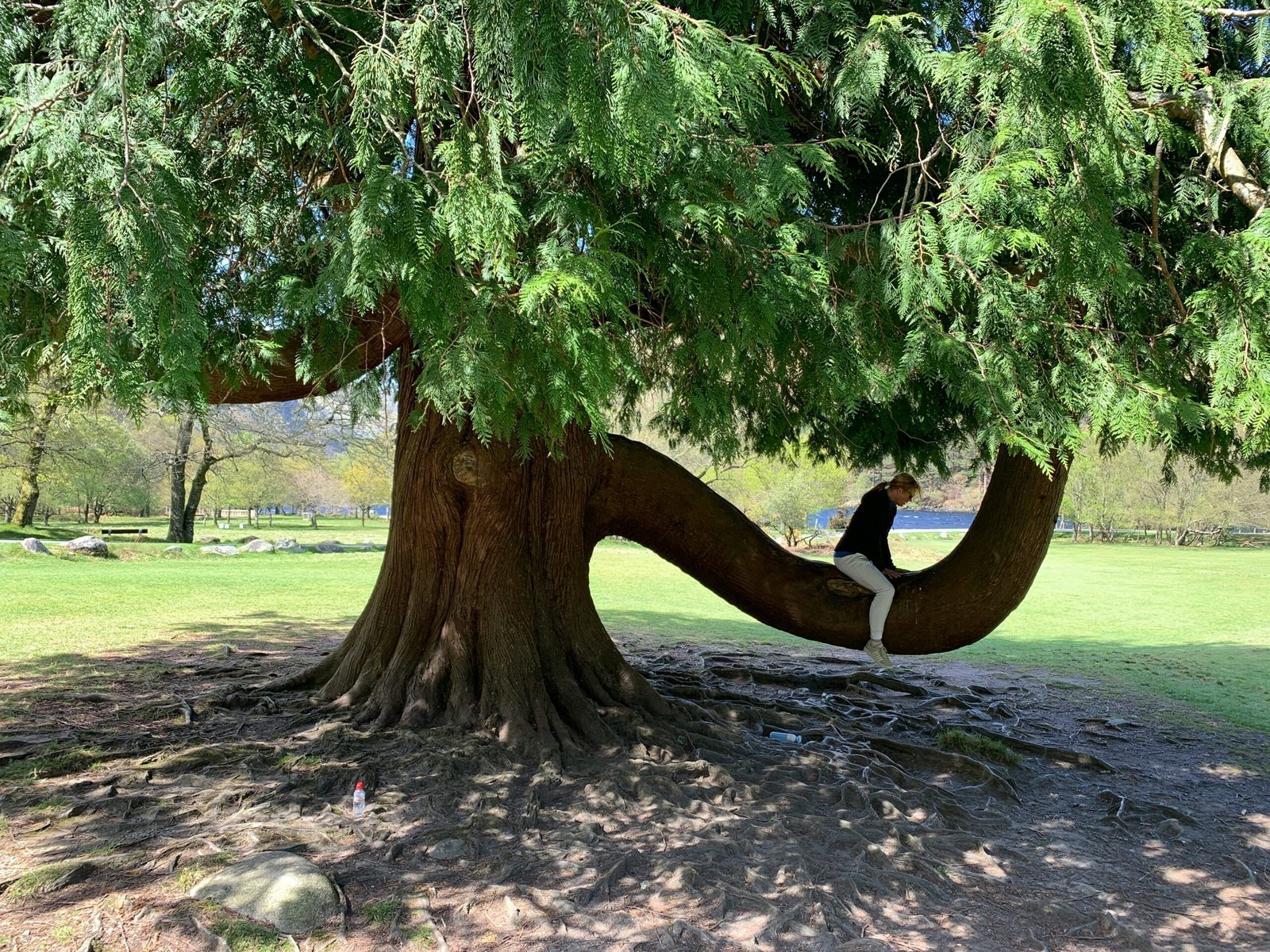
The 10th House is concerned with the most public part of the native’s chart. Naturally, the 4th House (the opposite angle to the 10th house) represents the most private or hidden part and hence highlighting the base and foundationof the native’s chart. Essentially, it symbolises the deepest part of the chart. One of the best metaphors used by astrologers to explain the contrast is the tree’s branches (10th House) vs the tree’s roots (4th House). The roots are the part that nobody is able to see, yet it’s the part of the tree that grounds and stabilises, and without that strong foundation the branches certainly suffer.
William Lilly describes the 4th House as the area of life that includes the father, lands, houses, ancestral inheritance and hidden treasures among other things. In fact, the 4th House signifies all buried things e.g. treasures, graves, oil, metals, coal…..etc.
Julius Firmicus Maternus, the Roman Astrologer, indicates that this is the place of family, property and substance.
Marcus Manilius described it as “The Foundation of All Things” and Al Biruni included grandparents as well as what happens to the dead.
Debra Houlding in “The Houses: Temples of the Sky” describes the 4th House as connected with “the beginning and end of all things” , the parents and the home.
Modern View
Psychological astrology focuses on the native’s early life, home environment and parent’s influence which have impacted every aspect of their life to form an emotional baseline. Essentially, the 4th house shows the native’s attitude towards support (or lack of) and nurturance which they will unconsciously create over and over again in their life.
Through examining the 4th House sign and the condition of its ruler along with any planets that might be present there, we might discover how the native’s home early life was like and the emotional dynamics among family members.
One of my clients grew up in a home where it was acceptable to fight and make up with her siblings and everyone was very vocal, often leading to outbursts. When she started dating her future husband, it was a shock to experience how his family handled conflict. They never discussed any issues out loud, but it was rather a “behind-closed-doors” sort of quiet process to resolve their conflicts. It took her a while to integrate that approach into her emotional baseline.
That might include whether or not the native’s parents were supportive or not. We might carry that with us and attract certain things to our lives based on what qualities in the home environment do we most naturally resonate with?
Finally, there’s an ongoing argument among many astrologers whether the 4th House represents the mother or the father. Howard Sasportas (in The Twelve Houses) describes it as “The Shaping Parent” who spends more time with the child and has a greater influence on them (10th House) and the “Hidden Parent” who does have a less influence on the child and therefore they’re considered less visible (4th House).
Astrological Key Phrases for The Fourth House:
It’s the most subterranean area of the chart, describing the private part of the native’s life.
Connected with family, parents, home environment, family lineage, ancestors and land in the Medieval period.
According to Howard Sasportas, it suggests the conditions surrounding the second half of life. What is considered the deepest within us (4th House) comes out at the end.
Acquiring property, or dealing with it in some capacity, e.g. Real estate agents indicate a strong 4th House in terms of sign, condition of ruler and planets’ placements.
Represents the end of the matter and hence it might indicate matters around death along with the 8th House.
Astrology Campus View
Examining the Natal Moon in a chart is essential to attain a full understanding of the emotional dynamics that plays a role in defining “Home” for the native. We have the need as a people to belong. It’s usually somewhere where you feel most yourself.
Home is where you feel fully accepted. Someone said once, “ Home is where the key fits”.
Having said that, examining both the Natal Moon and the 4th House could possibly produce conflicting information e.g. the biological parents may have given up the child for adoption, but the child had a loving upbringing and holds no grudge towards the biological parents. Therefore, we might conclude that the abandonment didn’t affect the native’s emotional dynamic, at least in a way that’s damaging.
Consider someone with Saturn (or Capricorn) in the 4th House. The home environment might have felt overly cold or unloving. While someone with Venus ( or Libra) in the 4th house might have experienced a home atmosphere that may have been accustomed to love and harmony.
Finally, Uranus (or Aquarius) in the 4th House often feels like a fish out of water, an outsider, or characterised as a displaced person. Always wondering “is that really where I belong?”